Accessible Folly Days Out: A UK Checklist for Limited Mobility
Follies are stubborn, romantic, often ridiculous buildings, and they tend to sit exactly where you would put one if you wanted a view: on a hill, at the end of a long avenue, or behind a field gate. That is part of their charm. It is also why a little planning makes such a difference if you have limited mobility. The good news is that many folly days out can be comfortable, sociable and genuinely satisfying with the right information. This checklist is about the practical details that decide whether a visit feels easy or exhausting.
Start with a Phone Call, Not the Website
Websites often have an accessibility page, but it may not answer the question you actually need answered. A quick call or email to the site office, National Trust, English Heritage, Cadw, Historic Environment Scotland or local authority park team will usually be more useful. Ask about the route from the car park to the folly, not just the folly itself.
Useful questions include: Is there a step-free route from parking to the main viewpoint? How many steps are involved, and are there handrails? What is the surface—tarmac, gravel, grass or something else? Are the accessible toilets open on the day I plan to visit? Is there a bench or seating near the view? Can I be dropped off closer? Is a mobility scooter or wheelchair available to borrow? If you use an assistance dog, ask about livestock and dogs-on-leads rules at the same time.
Many follies are on private land or open only on certain days. Seasonal opening, wedding closures and volunteer availability can all change the picture, so confirm the date. If the person on the phone sounds unsure, ask if there is a volunteer or warden you can speak to. They often know the site better than anyone.
Parking and the First Hundred Metres
The first hundred metres from the car to the gate will tell you more about a visit than any glossy photograph. Look for marked Blue Badge bays, a firm surface, and enough room to open doors fully. Grass parking can be fine in a dry spell and hopeless after rain. A sloping field is harder than it looks, especially when you are tired at the end of the day.
If there is no dedicated parking, check the nearest village car park, station or road with safe drop-off. Satnav can send you to a farm track or a locked gate, so use the postcode the site recommends and have a backup. Consider arriving earlier or later to avoid the busiest period if you need space to manoeuvre. A passenger can get out first while the driver parks; that small step often makes arrival calmer.
Surfaces: What Your Wheels and Feet Will Meet
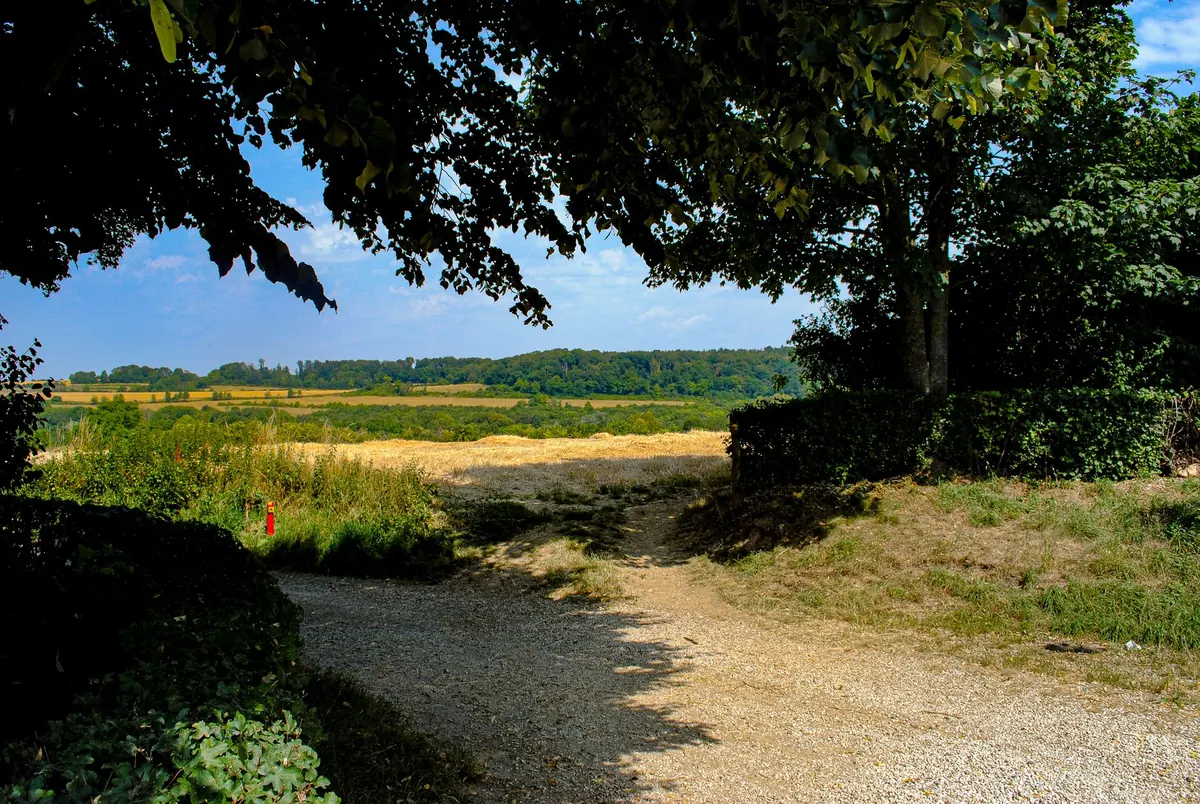
Surface matters more than distance. A hundred metres of loose gravel can be harder than half a mile of tarmac. Ask specifically about the last stretch to the viewpoint, because that is where paths often become rough, narrow or steep.
A quick surface guide
- Tarmac or concrete: usually the easiest for wheels, walking aids and tired legs.
- Bonded gravel or resin: often firm enough, but check for loose patches.
- Loose gravel: hard work for wheelchairs and scooters, and unstable underfoot.
- Mown grass: manageable when dry, tiring and muddy when wet.
- Woodland paths and mud: best avoided after rain unless you know the route is improved.
- Cobbles, setts and stone flags: bumpy and sometimes slippery; take them slowly.
Also ask about camber, tree roots, kissing gates, cattle grids and steep ramps. A path can be step-free and still be difficult if it tilts sideways or has a loose surface. Weather changes everything, so ring ahead if there has been heavy rain or snow.
Toilets, Seating and Shelter
An accessible toilet is not a luxury on a day out; it is often the deciding factor. Check whether it is open, whether it needs a RADAR key, and how far it is from the folly or café. Some rural sites have a portable toilet only, which may not suit everyone. If the café is open, ask about seating, doorway widths and whether there is a quiet corner.
Benches are worth asking about too. A site with a seat every few hundred metres feels very different from one with a single bench at the top. If seating is scarce, a lightweight folding stool can help, provided you can carry it or someone can carry it for you. Take water, a layer for wind, and any medication you might need. Folly sites are often exposed, and the weather at the top can be quite different from the car park.
Step-Free Routes and Viewpoints
Many follies were built as eye-catchers rather than places to enter. The tower itself may have a narrow spiral stair, a low doorway or no public access at all. That does not mean the visit is pointless. The view from the base, the surrounding parkland, a terrace or a café window can be the real reward.
Ask: “Can I get from the car park to a seat with a view without using a step?” That question gets a more useful answer than “Is it accessible?” If the answer is no, ask what the closest alternative is. Sometimes a nearby lane, a level path around the outside, or a viewing area in the grounds gives you the folly from a different angle. Binoculars or a camera with zoom can bring details closer without a single stair.
The best access information is specific: not “mostly accessible”, but “tarmac to the gate, then a short ramp to a bench facing the tower”.
A Folly Day Checklist
- Opening: confirm the date, time and whether the folly or grounds are open.
- Parking: check Blue Badge bays, drop-off points and surface type.
- Route: ask about steps, gradients, gates and the last stretch to the view.
- Surface: tarmac, gravel, grass or mud? Recent weather matters.
- Toilets: accessible facilities, RADAR key, distance and opening hours.
- Seating: benches, café seating and shelter from wind or rain.
- Equipment: wheelchair, scooter, walking aid, assistance dog and charging needs.
- Back-up plan: a nearby park, tearoom or level viewpoint if the main route disappoints.
Plan B, and a Sensible Note Before You Go
Build in a Plan B. Folly sites are often rural, and a path that looked fine in summer may be muddy in February. If the main route is not going to work, a nearby market town, a accessible country park or a tearoom with a view can still make the day worthwhile. Travel home before you are exhausted, not after, and allow more time than you think you need.
If you have a health condition, a recent injury or concerns about stamina, pain or medication, speak to a healthcare professional before planning a long walk or a day on uneven ground. This checklist is general practical advice, not medical guidance. With a few specific questions asked in advance, a folly day out can be relaxed, rewarding and far less of a gamble.
Photo: Bijsmans Fotografie / Pexels